
If you are about to hand over your furniture, family photos, and everything that makes your place feel like home, you deserve more than a polite voice on the phone and a low quote.
That is exactly why learning how to verify a moving company in California matters before you agree to anything. Moving comes with enough pressure, and dishonest companies know that overwhelmed people are more likely to make quick decisions. They push you to move fast and skip the details that should always be checked first.
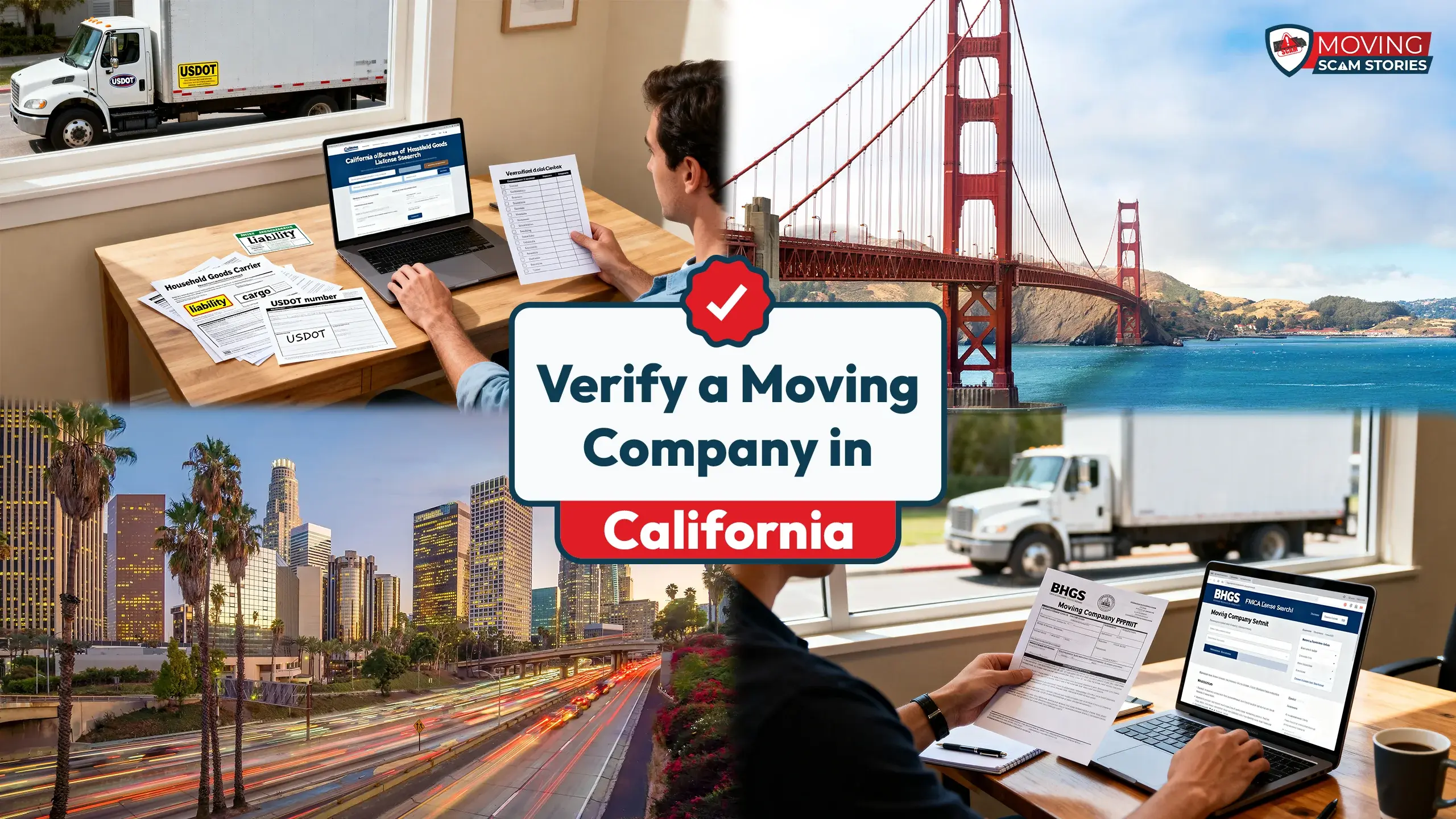
If your mover is operating in California, there is a system to help you confirm whether the business is properly authorized. The California Bureau of Household Goods and Services recommends that consumers check whether a moving company is properly authorized to operate in the state. It also offers a license search tool where you can review company details, including any complaints or enforcement actions.
In simple terms, you do have official ways to identify legitimate movers in California and avoid hiring the wrong company.
Let’s discuss how to verify a moving company in California step by step, what to check, and where to check it.
Moving Company Regulations in California
Before you start checking licenses and paperwork, it is important to understand who actually oversees movers in California and what rules they are expected to follow.
Who Regulates Moving Companies in California
In California, the main authority is the Bureau of Household Goods and Services (BHGS), which operates under the Department of Consumer Affairs. This agency oversees movers that transport household goods within the state for payment and enforces moving company regulations in California.
Here are the key responsibilities of the BHGS:
- They issue a Household Goods Carrier permit, which serves as the official moving company license required to operate legally in California.
- Movers must provide proof of insurance, including liability and cargo coverage, before they can be approved.
- They monitor complaints, investigate violations, and take action against companies that do not follow state laws.
When California State Laws Apply vs Federal Regulations
Not every move is regulated the same way. The rules depend on whether your move stays within California or crosses state lines.
Here’s how it works:
- Intrastate Moves (within California): If your move starts and ends in California, state laws apply. The mover must have proper registration in California and be authorized by the BHGS.
- Interstate Moves (crossing state borders): If your move goes from California to another state, federal regulations apply as well. In this case, the mover must be registered with the Federal Motor Carrier Safety Administration (FMCSA) and have a valid USDOT number.
To put it simply:
If you are moving from Los Angeles to San Diego, California state rules apply.
If you are moving from California to Nevada or Texas, federal rules also apply.
Types of Movers Operating in California
When you are evaluating options, it is important to understand the types of movers you may come across. This makes mover's license verification much clearer because you know exactly what to look for.
Here are the main types:
Intrastate Movers:
- These operate only within California.
- They must have a valid permit issued by the BHGS.
- They are required to meet California’s insurance and compliance standards.
Interstate Movers:
- These handle moves that cross state lines.
- They must be registered with the FMCSA.
- They must display a USDOT number and federal operating authority.
Brokered Movers:
- These companies arrange your move but may not handle your belongings directly.
- They must follow both state and federal requirements, including proper registration and bonding.
California Licensing Requirements for Moving Companies
When you hire a mover, you are trusting a company with your belongings, your schedule, and, in many cases, items that cannot be replaced. That is why California has strict licensing rules in place.
Approval from the Bureau of Household Goods and Services (BHGS)
The most important requirement comes from the Bureau of Household Goods and Services (BHGS). Any company transporting household goods for compensation within California must obtain official authorization from this agency.
This approval usually includes:
- A Household Goods Carrier (HGC) permit issued by the BHGS.
- A valid moving company license number that confirms the company is authorized to operate within California.
- Official listing in the state database, which allows you to complete mover's license verification and confirm moving company registration in California.
Without this permit, a company is not legally allowed to perform intrastate moves in California.
Insurance Requirements (Liability and Cargo Protection)
Moving companies must prove they can financially protect your belongings if something goes wrong during the move.
The BHGS requires licensed movers to maintain and file proof of insurance, including:
- Public liability insurance for bodily injury and property damage.
- Cargo insurance to protect customer belongings during transportation.
- Workers’ compensation insurance if the company has employees.
Minimum requirements typically include:
- Liability coverage of at least $750,000 for bodily injury and property damage.
- Cargo insurance coverage of at least $20,000 per shipment.
Broker Licensing
Some companies you come across may not actually handle your move. Instead, they act as intermediaries and arrange transportation with another carrier. These are known as moving brokers.
In California:
- Household goods brokers must be licensed or registered, depending on their operations.
- Brokers operating interstate must comply with federal rules and maintain a surety bond.
- The Federal Motor Carrier Safety Administration (FMCSA) requires brokers to carry a $75,000 surety bond (BMC-84 or BMC-85).
Federal Registration for Interstate Movers
If a moving company transports goods across state lines, additional federal requirements apply beyond California regulations.
They must:
- Register with the Federal Motor Carrier Safety Administration (FMCSA).
- Obtain a USDOT number for identification and tracking.
- Maintain minimum insurance coverage, including $750,000 in liability insurance for interstate transport.
This is especially important if you want to verify a moving company in USA for long-distance moves.
How to Verify a Moving Company in California
If you follow the steps below, you will be able to verify a moving company in California.
Step 1: Confirm Your Move Type in California
This step is important because it tells you exactly which rules apply and where your mover should appear.
When California State Rules Apply
If your pickup and delivery locations are both inside California, your move is intrastate. This is where regulations in California and the Bureau of Household Goods and Services (BHGS) apply.
The mover must have a valid Household Goods Carrier (HGC) permit issued by BHGS and should appear in California’s official license database.
When Federal Regulations Apply
If your move crosses state lines, federal rules apply in addition to state laws. Interstate movers must be registered with the Federal Motor Carrier Safety Administration (FMCSA) and have a valid USDOT number.
A simple way to keep it clear:
- California only: check BHGS first.
- Crossing state lines: check FMCSA first, then confirm the details match everywhere.
Step 2: Check California BHGS Registration
The BHGS clearly states that a permit is required when household goods are transported for compensation within California.
How to Search BHGS Records
Here is the process:
- Go to the BHGS license search tool (Household Goods Carrier lookup).
- Search using the company name, and also try any alternate names listed on their website or documents.
- Ask the mover for their permit number and match it with the state database.
What Information Should Match in State Records
When you check moving company credentials, consistency is everything. Look for:
- Company legal name
- Permit number (HGC number)
- Business address (not just a virtual office)
- Phone number
- License status listed as “Active”
If any of these details do not match, that is a warning sign.
Step 3: Verify Federal Registration for Interstate Movers
If your move is interstate, this step is critical. Many moving scam cases happen because people skip this check.
FMCSA Registration Check
Use the FMCSA “Search for a Registered Mover” tool. This database allows you to confirm whether a company is legally authorized.
You can review:
- Registration status
- Business type (carrier, broker, or both)
- Company contact details
- Complaint history
USDOT Number Verification
Every interstate mover must have a USDOT number. You should verify it in two places:
- FMCSA mover search tool
- SAFER Company Snapshot system
What you want to see:
- USDOT status marked as “Active”
- Operating authority listed as “Authorized for Household Goods”
- Matching company name and address
Step 4: Confirm Business Registration in California
Licensing and business registration are separate. A company can exist legally but still not be authorized to move household goods.
Business Name Registration in California
Use the California Secretary of State Business Search. This is the official database for business entities.
What to do:
- Search the company name exactly as shown in your estimate.
- Open the listing and review entity details.
- Check status (Active, Suspended, or Dissolved).
Confirm Legal Name vs DBA Records
Many moving scam stories start with mismatched names.
So always:
- Ask for the exact legal business name on your contract.
- Compare it with the Secretary of State records.
- Match it with BHGS or FMCSA data.
Step 5: Verify Physical Presence and Local Operations
Look for signs that the company truly operates where it claims:
- A real physical address that matches official records
- Branded trucks with the same company name
- A working phone line with consistent responses
- Clear identification of the team handling your move
This helps you identify legitimate movers in California instead of companies that only exist online.
Step 6: Check Insurance and Liability Requirements in California
California requires movers to maintain strict insurance coverage under BHGS rules.
Here is what to ask for:
Proof of liability insurance (minimum $750,000 coverage)
Proof of cargo insurance (minimum $20,000 per shipment)
Workers' compensation insurance, if applicable
Then verify that the insurer details and coverage dates match BHGS records.
Step 7: Review Consumer Complaints and Enforcement Actions
This is where you understand how the company behaves after getting paid.
California Consumer Complaint Records
You can check complaint and enforcement information through BHGS and the California Department of Consumer Affairs.
Look for patterns such as:
- Sudden price increases
- Delayed deliveries
- Items held hostage
If you experience issues, you can also submit your scam story through official complaint channels.
Federal Complaint Records
For interstate movers, FMCSA uses the National Consumer Complaint Database (NCCDB).
You can file complaints online or call:
1-888-DOT-SAFT (1-888-368-7238)
Step 8: Verify Estimates and Required Documents
Before agreeing to anything:
- Always request a written estimate, not a verbal quote
- Make sure all charges are clearly listed (labor, distance, packing, stairs, extra fees)
- Confirm the company name matches all licensing and registration records
California also requires movers to follow tariff rules, which regulate pricing transparency.
Step 9: Confirm Final Operational Details Before Hiring
This is your final check before making a decision.
Ask direct questions and expect clear answers:
- Who will handle the move?
- What is the exact pickup and delivery timeline?
- How are damages handled?
- What payment methods are accepted?
Who Will Handle the Move (Carrier vs Broker)
Understanding this can save you from serious problems.
Ask:
- “Are you the carrier or a broker?”
- “If you are a broker, which carrier will handle my move?”
- “Can you provide their USDOT number and license details?”
This final step helps you fully verify a moving company in California and avoid costly mistakes.
Consumer Rights When Hiring Movers in California
Many people only start asking about their rights after something goes wrong. The smarter approach is to understand them before you sign anything.
Right to Hire Licensed and Regulated Movers
You have the right to:
- Work with properly authorized licensed movers in California
- Ask for a valid Household Goods Carrier (HGC) permit number
- Request proof of insurance coverage
- Refuse service if the company cannot provide valid credentials
Right to Written Estimates
You are entitled to a written estimate before your move begins. California has strict requirements around this.
You have the right to:
- Request a detailed written estimate (often called a “Not To Exceed” estimate)
- See clearly listed charges such as labor, hourly rates, packing, stairs, long carry fees, and fuel
- Understand whether the estimate is binding or non-binding
For interstate moves, federal law also requires written estimates under FMCSA regulations.
Right to Clear Contracts and Documentation
Before moving day, you must receive proper documentation. In California, this is not optional; it is required.
This may include:
- A Bill of Lading (the official contract for your move)
- A "Not To Exceed" price agreement for an intrastate move
- Written terms and conditions
- Company contact and license details
You have the right to read and fully understand everything before signing. If something feels unclear, you can pause and ask questions.
Right to Insurance and Liability Protection
Under California law, movers must carry specific insurance coverage to protect consumers.
You have the right to:
- Ask what type of valuation coverage is included
- Understand the difference between basic coverage and additional protection options
- Request written confirmation of coverage limits
Right to Fair Pricing and No Surprise Charges
California requires movers to follow tariff rules, which regulate how prices are calculated and disclosed.
You have the right to:
- Transparent pricing based on hourly rates or agreed estimates
- Advance disclosure of additional fees
- No charges beyond a “Not To Exceed” estimate for intrastate moves
If a mover demands significantly more money than agreed without explanation, that is a major warning sign.
Right to File a Complaint in California
If something goes wrong, you have official channels to take action.
For intrastate movers, you can file a complaint with the Bureau of Household Goods and Services (BHGS).
You may also submit complaints to:
- California Department of Consumer Affairs
- California Attorney General’s Office
For interstate moves, you can file a complaint through the FMCSA National Consumer Complaint Database or call:
1-888-DOT-SAFT (1-888-368-7238)
If you have experienced fraud or misconduct, you can also submit your scam story to help others avoid similar situations.
Right to Know Whether You Are Hiring a Carrier or a Broker
This is one of the most overlooked rights, and it is critical.
You have the right to know:
- Whether the company is the actual carrier handling your move
- Or whether they are acting as a broker, arranging the move
If they are a broker, they must disclose this and provide details of the actual carrier. You should then independently verify that company as well to ensure they are among the legitimate movers in California.
Right to Refuse Service Before Loading
You are never obligated to proceed if something does not feel right on moving day.
You have the right to stop the move if:
- The company name does not match your paperwork
- Movers cannot provide identification or license details
- The contract terms are different from what you agreed to
- The price suddenly increases without explanation
Right to Protect Yourself From Scams
You have the right to take control of the process.
You can:
- Take your time before signing any agreement
- Perform full movers license verification
- Compare multiple companies
- Ask detailed questions
- Walk away at any point
Where to Report a Fraudulent Moving Company in California
Even after taking all the right steps, things can still go wrong. If that happens, you are not stuck.
California and federal authorities provide clear channels to report fraud, file complaints, and take action against dishonest movers.
Bureau of Household Goods and Services (BHGS)
If your move was within California (intrastate move), your first step should be the Bureau of Household Goods and Services (BHGS).
You should report here if the mover:
- Operated without a valid Household Goods Carrier (HGC) permit
- Violated contract terms or estimates
- Charged unauthorized or inflated rates
- Failed to deliver services as promised
- Misrepresented as being among licensed moving companies in California
How to File a Complaint with BHGS
You can file a complaint directly through the BHGS complaint system online or by mail.
Prepare these details before filing:
- Company name and contact details
- HGC permit number (if available)
- Copy of your estimate or contract (Bill of Lading)
- Payment receipts or invoices
- Photos or documentation of damages or misconduct
- A clear timeline of events
California Attorney General Consumer Protection Section
If the issue involves fraud, deception, or unfair business practices, you should also report the company to the California Attorney General’s Office.
This office handles cases involving:
- False advertising or misleading claims
- Fake or invalid moving company license information
- Deposit theft or financial fraud
- Contract misrepresentation
- Scams involving companies claiming to be legitimate
If you want to help others avoid the same situation, you can also submit your scam story.
Federal Reporting Options
If your move crossed state lines or involved an interstate carrier or broker, federal authorities must also be notified.
You should report to federal authorities if:
- Your move was interstate.
- The company provided a fake USDOT number.
- Your belongings were held hostage for additional payment.
- The mover violated federal consumer protection rules.
Federal Complaint Channels
You can report through the following systems:
1. FMCSA National Consumer Complaint Database (NCCDB)
This is the primary federal system for reporting household goods moving complaints.
You can file online or call:
1-888-DOT-SAFT (1-888-368-7238)
Provide details such as:
- USDOT number (if available)
- Company name and business address
- Contract and estimate documents
- A clear description of the issue
2. Federal Trade Commission (FTC)
The FTC handles broader fraud and deceptive business practices, including moving-related scams.
You should report here if:
- The company used misleading advertising
- You were targeted in a coordinated scam
- There was identity theft or payment fraud involved