

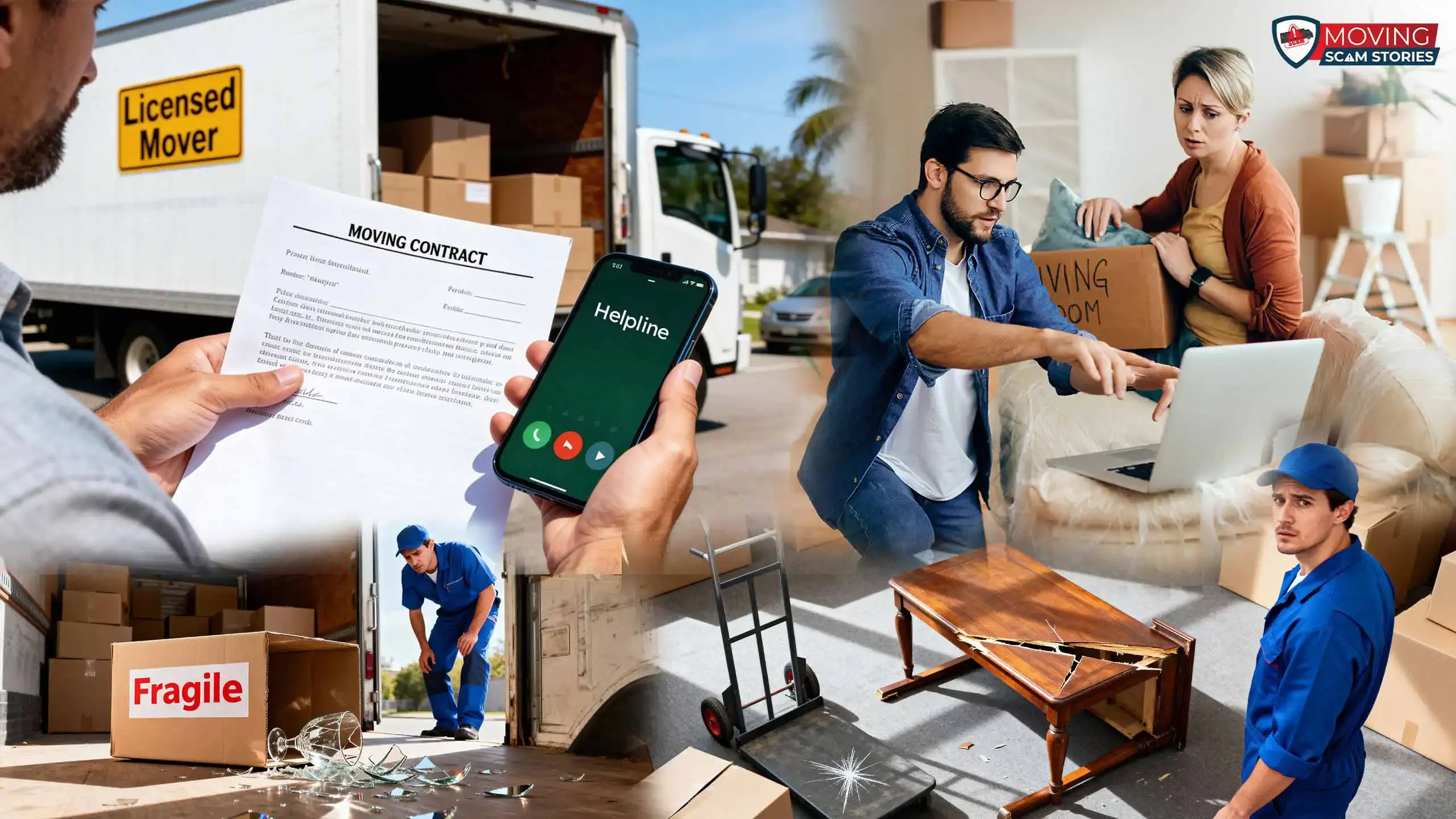
A move should change your address, not your bank balance.
If you are here because something feels off, trust that instinct. When people get scammed during a move, it usually hits in two places at once: your home and your sense of control.
One minute you are planning a fresh start, and the next you are trying to report moving scams while your belongings are somewhere you cannot reach, and your phone is full of unanswered calls.
This is not rare, and it is not your fault. The Better Business Bureau reported that in 2025, there were over 100,000 inquiries on BBB about movers, and 718 complaints were filed against movers that year.
They also noted that people who reported moving scams to BBB Scam Tracker lost a median of $754. And when you read complaint patterns, the theme is painfully consistent: BBB found that 90% of complaints and negative reviews mention price or money issues.
So if you are dealing with a fraudulent moving company, let’s discuss what to do, what proof to gather, and how to report a scam moving company the right way.
What Counts as a Moving Scam
When most people hear the word “scam,” they imagine something obvious or extreme. In reality, many moving scams look professional on the surface. They start with a legitimate-looking website, a friendly salesperson, and proper paperwork.
A moving scam is any deceptive practice where a mover intentionally misleads you, overcharges you, or holds your belongings or money unfairly.
Bait-and-Switch Pricing Scam
This is one of the most common moving scams. It starts with a low estimate that feels reasonable and competitive. Once your belongings are loaded onto the truck, the price suddenly increases. The movers blame weight, volume, stairs, or “miscommunication.” The key sign is that the original quote was intentionally misleading.
Hostage Load Scam
In this scam, movers refuse to deliver your belongings unless you pay extra fees that were never agreed to. Your items are effectively held hostage. This is not a billing dispute. This is coercion, and it is a clear form of fraud.
Unlicensed or Fake Mover Scam
Some companies operate without proper licensing or use stolen registration numbers from legitimate movers. They disappear after receiving payment or become unreachable once problems arise.
Hidden Fees and Inflated Charges Scam
This scam involves adding fees after the move begins. Charges for stairs, long carries, packing materials, storage, or weight adjustments suddenly appear on your bill. When these fees are not clearly disclosed or are intentionally inflated, they are considered deceptive practices.
Lost, Damaged, or “Missing Items” Scam
Some movers damage or lose belongings and then refuse to acknowledge responsibility. Others demand additional payment to return missing items or delay the claims process until customers give up.
Deposit and Cancellation Scam
In this scenario, movers demand a large upfront deposit and then cancel at the last minute or fail to show up. When you ask for a refund, they refuse or disappear.

Did you know that moving companies must give you a booklet called "Your Rights and Responsibilities When You Move"? This booklet is full of useful information, helping you understand what to expect and what your rights are.
Evidence to Collect Before Reporting
Before you take the next step to report moving scams, it is important to gather everything connected to your move. Many people rush to file complaints while they are still emotional, which is completely understandable, but strong evidence is what gives your case weight.
Documents and Contracts
Start with every document you received from the moving company. This includes estimates, contracts, bills of lading, emails with pricing details, and any terms and conditions you were asked to sign.
Proof of Payment and Receipts
Collect all payment records related to the move. This includes credit card statements, bank transfers, wire confirmations, cash receipts, and deposit invoices.
Written Communications and Call Logs
Save all emails, text messages, and chat conversations with the mover. If phone calls were involved, write down dates, times, phone numbers, and the names of anyone you spoke with.
Photos, Videos, and Inventory Lists
Photos and videos can be powerful evidence. Take pictures of your belongings before the move, during loading, and after delivery. If items are damaged or missing, document it immediately. Inventory lists, especially those signed by the movers, help show what was taken and what was returned.
Timeline of Events and Key Names
Finally, create a simple timeline of what happened from the first contact to the current situation. Write down dates, locations, amounts quoted, amounts charged, and the names or titles of everyone involved.
How to Report Moving Scams – Step by Step
This is the part most people are searching for, even if they are not saying it out loud. When something goes wrong during a move, the biggest question is not “Was this a scam?” but “What do I do now, and who do I go to?”
Step 1: Confirm the Type of Move You Had
Before you report anything, you need to know whether your move was interstate or local.
If your move crossed state lines, even by one mile, it is considered an interstate move. Interstate movers fall under federal oversight.
If your move stayed within the same state, it is a local move, and state agencies handle most complaints.
This distinction matters because it determines where your moving complaints will actually be reviewed and acted on.
Step 2: Report Interstate Moving Scams to the FMCSA
If your move crossed state lines, your first official stop should be the Federal Motor Carrier Safety Administration (FMCSA). This is the federal agency that regulates interstate movers.
You can file a complaint directly through the FMCSA’s National Consumer Complaint Database. This is one of the most important steps when you report moving scams, because the FMCSA tracks patterns, investigates repeat offenders, and can take enforcement action against licensed movers. When filing, include your evidence, your timeline, and clear details of what went wrong.
Step 3: File a Complaint with Your State Authorities
For local moves, or even in addition to a federal complaint, you should contact your state consumer protection office or licensing authority. In many states, movers must be licensed at the state level.
You can also file a complaint with your state's Attorney General's Office. State attorneys general handle deceptive business practices, including moving company fraud. This step is especially important if the mover is unlicensed, disappeared, or refuses to resolve the issue.
This is where many people formally file a complaint against a moving company that violates state laws.
Step 4: Report the Company to the FTC
The Federal Trade Commission (FTC) collects reports on scams and deceptive practices across industries. While the FTC may not resolve your individual case, your report contributes to national enforcement actions and public warnings.
If you file here, it will help flag companies involved in moving company report patterns and support broader consumer protection efforts.
Step 5: Submit a Complaint to the BBB
Filing with the Better Business Bureau (BBB) is not a legal step, but it is a strategic one. Many movers respond quickly to BBB complaints to protect their ratings.
This step can sometimes lead to faster refunds, deliveries, or written responses. It also helps warn other consumers and strengthens public records.
You can also share your scam story with us. Sharing what happened can help others recognize warning signs and avoid the same situation.
Submit your storyStep 6: Contact Local Law Enforcement if Necessary
If your belongings are being held hostage, stolen, or you are being threatened, contact your local police department. While not every moving dispute is criminal, hostage load situations and outright theft can cross that line.
This step is especially relevant when your situation involves violations of rights, such as coercion or property withholding.
Step 7: Dispute Charges and Protect Your Money
If you paid by credit card, contact your card issuer immediately to dispute the charges. If you used a bank transfer, wire, or payment app, report the transaction as fraud as soon as possible.
This step runs parallel to reporting agencies and is critical to protecting your financial side while the complaints are being processed.
What to Do Based on Your Situation
If Your Shipment Hasn’t Been Picked Up Yet:
If you suspect a scam before pickup, stop payment immediately if possible. Cancel in writing, save all communication, and begin reporting. Early action makes it easier to protect yourself from moving scams before they escalate.
If Your Belongings Are in the Mover’s Possession
Focus on documentation and reporting simultaneously. Do not agree to new charges verbally. Keep everything in writing and start the formal complaint process with the FMCSA or state authorities, depending on your move type.
If Delivery Is Delayed or They Are Demanding More Money
This is a hostage load scenario. Pay only what is legally required, document all demands, and report immediately. These cases are central to moving complaints and are taken seriously when the evidence is clear.
If Items Are Damaged or Missing
Document the damage as soon as delivery occurs. File a written claim with the mover, then escalate to regulators if the company refuses to respond.
Where to File Complaints
Once you are ready to move forward, knowing exactly where to file makes a huge difference. Different agencies handle different parts of moving scams, and filing in the right places increases the chances that your complaint is taken seriously and actually reviewed.
Federal Agencies for Interstate Moves
If your move crossed state lines, federal agencies are your primary point of contact.
- Federal Motor Carrier Safety Administration (FMCSA)
- This is the most important agency for interstate moving scams. File your complaint through the National Consumer Complaint Database. https://www.fmcsa.dot.gov/protect-your-move/file-a-complaint
- Federal Trade Commission (FTC)
- The FTC collects reports on deceptive business practices, including moving company fraud. While they may not resolve individual disputes, your report helps build cases against repeat offenders. https://reportfraud.ftc.gov
State Consumer Protection and Licensing Offices
For moves within the same state, or in addition to federal reporting, state agencies play a key role.
- State Consumer Protection Office or Moving License Authority
- Many states require movers to be licensed. These offices can investigate unlicensed movers and deceptive practices. Find your state office: https://www.usa.gov/state-consumer.
Attorney General Offices
Every state has an Attorney General’s office that handles consumer fraud.
- State Attorney General’s Office
- These offices investigate unfair and deceptive business practices. If a mover refuses to cooperate, disappears, or engages in coercive behavior, file your report here. Find your state Attorney General: https://www.naag.org/find-my-ag/
Local Law Enforcement (When Applicable)
Not every dispute is criminal, but some situations require immediate action.
- Local Police Department
- Contact law enforcement if your belongings are being held hostage, stolen, or if you are being threatened.
Consumer Complaint Databases
These platforms help warn others and sometimes prompt quicker responses from companies.
- Better Business Bureau (BBB)
- Filing a complaint here creates a public record and pressures movers to respond. Many consumers see faster communication through BBB complaints related to scam reports. https://www.bbb.org/file-a-complaint
What Happens After You File a Report
After you report moving scams, many people feel a mix of relief and uncertainty. You have taken action, but now you are wondering what actually happens behind the scenes.
What Agencies Can and Cannot Do
| What Agencies Can Do | What Agencies Cannot Do |
|---|---|
|
Accept and officially record moving scam complaints |
Force a mover to immediately refund your money |
|
Investigate patterns of moving company fraud |
Resolve private billing disputes on your behalf |
|
Issue warnings, fines, or penalties to licensed movers |
Act as your personal legal representative |
|
Suspend or revoke mover licenses for serious violations |
Guarantee recovery of lost or damaged items |
|
Refer cases for civil or criminal enforcement |
Speed up cases without sufficient evidence |
|
Share data across agencies to identify repeat offenders |
Intervene in disputes with insufficient jurisdiction |
|
Use complaints to shut down unlicensed or illegal movers |
Replace chargebacks, lawsuits, or insurance claims |
Expected Timelines and Follow-Ups
Timelines vary depending on the agency and the severity of the case. Some organizations acknowledge complaints within days, while investigations can take weeks or months. High-volume agencies may not respond personally unless they need more information.
How to Track Your Complaint and Build Your Case
- Save every confirmation number or reference ID after you report your moving scam.
- Bookmark the agency portal where you submitted the complaint.
- Check your email regularly for follow-up requests or updates.
- Add new evidence if the situation changes or escalates.
- Keep a running log of all post-report communication with the mover.
- Track deadlines for payment disputes or insurance claims.
- Reference your complaint ID when contacting agencies again.
- Organize everything in one folder in case legal action becomes necessary.
What are Your Rights as a Consumer When Hiring Movers
When something goes wrong during a move, scammers rely on your confusion. Clear rights remove that confusion, and these are not “nice-to-have” protections. They are enforceable consumer rights that give you leverage when a mover crosses the line.
Rights Related to Estimates, Pricing, and Billing
You have the right to:
- Receive a written estimate that explains how charges are calculated
- Know whether your estimate is binding or non-binding
- Refuse surprise charges that were not disclosed upfront
- Receive a final bill that matches the agreed pricing terms
- Question and dispute inflated or unexplained fees
Rights Related to Delays, Delivery, and Hostage Situations
You have the right to:
- Expect delivery within the agreed or legally reasonable timeframe
- Receive honest updates about delays without pressure tactics
- Refuse payment demands tied to hostage load situations
- Report movers who withhold your belongings to force extra payment
Rights Related to Loss, Damage, and Valuation Coverage
You have the right to:
- Select valuation coverage before the move begins
- File a written claim for lost or damaged items
- Receive a response within the legally required timeframe
- Escalate claims if a mover ignores or denies responsibility
Dispute Options and Chargebacks
You have the right to:
- Dispute unauthorized or deceptive charges with your bank or card issuer
- Request chargebacks when billing practices are misleading
- Pursue small claims court or civil remedies when necessary
- Use documentation and moving scam complaints as supporting evidence