
Scams don’t start with a lie. They start with urgency, relief, and the hope that this problem is finally handled.”
If you are here because you typed car shipping scams into Google, you are probably trying to protect your car and your money. You might be moving, buying a vehicle online, or shipping one across the country, and you can feel that small question in your chest: Is car shipping safe?
Fraud around vehicle shipping is not rare, and it is not always obvious. The Better Business Bureau reports that it receives thousands of complaints every year about fake vehicle shipping and escrow companies. Among the people who officially reported these scams in their tracking system, 41% said they actually lost money.
And federal regulators are seeing the pressure too. The FMCSA has warned about a dramatic increase in complaints involving auto transporters and auto transport brokers, and they point consumers to verify registration details like MC numbers before booking.
So let’s discuss exactly how fake car shipping companies operate and what modern auto transport scams look like in the real world.
What Car Shipping Scams Are
When people hear the term car shipping scams, they imagine some dramatic crime story. But in reality, most scams in this industry do not look dramatic at all. They look normal. They look professional. They look like a standard booking process.
A car shipping scam is any situation where a company or individual misleads you, lies to you, or manipulates you in order to take your money unfairly or force you into unexpected charges during the vehicle transport process.
What Counts as a Scam in Auto Transport
In simple terms, a scam in auto transport happens when the company says one thing to win your trust, and then does something completely different once they have your deposit or your vehicle.
Here are situations that clearly fall under auto transport scams:
- Giving you a very low quote just to secure your booking, then increasing the price before pickup
- Taking a deposit and never assigning a real carrier
- Claiming your vehicle is insured when there is no valid insurance coverage
- Holding your vehicle at delivery and demanding extra money
- Using fake registration numbers or impersonating legitimate car shipping companies
For Example: You request a quote online and receive an offer for $650 while other companies are quoting $1,100. The representative tells you, “We have a truck already heading your way, so we can offer a special rate.” You pay a $200 deposit. Two days before pickup, they call and say, “The carrier is asking for $450 more due to route changes.” If you refuse, they say your deposit is non-refundable.
Another example: A company provides you with an MC number that looks valid. Later, you discover that the number belongs to a completely different business. The website, logo, and email were created to look real. This is how fake car shipping companies operate.
You may also hear excuses like:
- “The driver is stuck in traffic, just send the remaining balance now.”
- “The market price changed overnight.”
- “The deposit is just a processing fee.”
How Fake Auto Transport Companies Operate
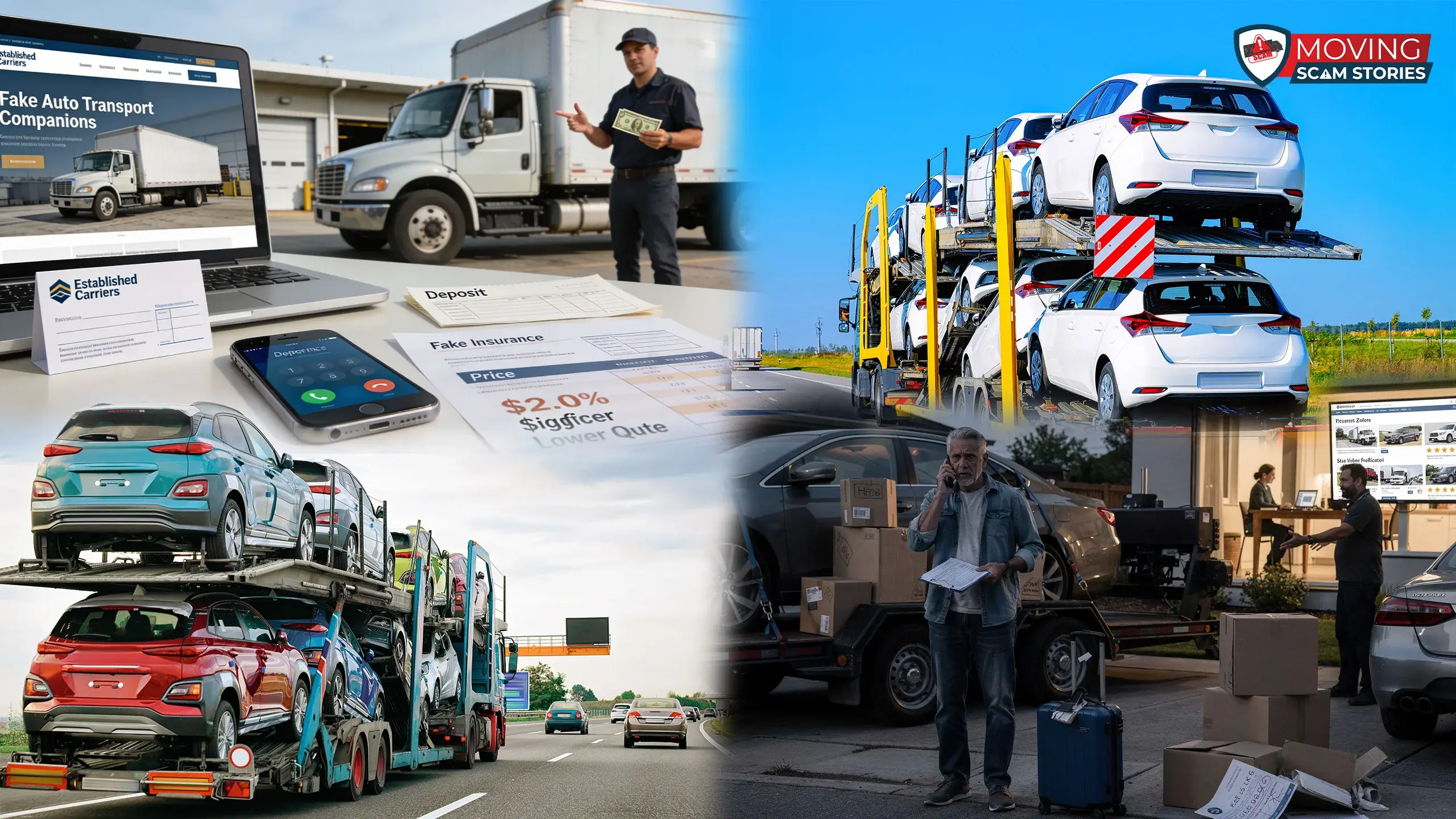
Most people do not lose money because they are careless. They lose money because the system was designed to look normal. Fake car shipping companies do not operate randomly. They follow a pattern. Once you understand that pattern, you start seeing the warning signs much earlier.
They Build a Professional Looking Identity
Scammers know that if the website looks clean, the phone is answered professionally, and the representative sounds confident, most people will lower their guard. So they create:
- A polished website with stock truck images
- A business name that sounds similar to established carriers
- A logo that looks corporate
- A toll free number
- Fake five star reviews
Sometimes, they even copy registration details from real businesses and place them on their website to appear as legitimate car shipping companies.
For Example: You search for a transport company and find one with hundreds of positive reviews. The site lists an MC number and a DOT number. Everything checks out at first glance. Later, you discover that those numbers belong to another company in a different state. The scammer simply reused public registration information.
They Hook You With an Unrealistically Low Quote
You request quotes from five companies. Four of them fall between $1,000 and $1,200. One company quotes $650.
That low price is a bait.
Scammers understand how the human brain works. When you are moving or buying a car, you already feel financial pressure. A lower number feels like a relief.
You might even hear phrases like:
- “We have a truck in your area already.”
- “This rate is only valid today.”
- “If you book now, we can lock this price.”
Example: You accept the $650 offer and pay a deposit. A day before pickup, they call and say, “The carrier is demanding more due to market changes.” Now the price is $1,150. If you refuse, they threaten cancellation fees.
They Secure a Deposit and Create Pressure
Many car shipping scams revolve around deposits because that is the easiest money to collect. After the payment is made, communication changes.
You may notice:
- Slower responses
- Vague pickup windows
- Excuses instead of confirmations
- Sudden policy changes
They know you have already planned around this shipment. You may have scheduled movers, flights, or home closings. That pressure works in their favor.
Example: You are relocating for work. Your start date is fixed. Two days before pickup, they say the driver needs an extra $300 in cash at delivery. You pay because you cannot afford delays.
They Use the “Hostage Load” Tactic
In this situation, the vehicle is picked up normally. Everything seems fine. But at delivery, the driver demands more money than agreed.
You might hear something like, “The balance is higher due to route adjustments.” If you refuse, they delay unloading the vehicle.
In extreme cases, they threaten to take the vehicle to a storage yard until additional fees are paid.
They Manipulate Insurance and Documentation
Many consumers assume that insurance coverage is automatic. Scammers take advantage of that assumption. They may say, “Your vehicle is fully insured,” but never provide proof. Or they send generic certificates that do not actually apply to your shipment.
Here is what often happens:
- No written contract
- No clear breakdown of pricing
- No verifiable insurance certificate
- No carrier details provided before pickup
They Disappear and Rebrand
This is the final stage. Once complaints start building, the company shuts down the website and reappears under a new name, new branding, and new phone number.
This cycle is common in auto transport scams because creating a new website is easier than rebuilding trust.
You might even see similar wording across multiple websites. The language, layout, and promises look identical. Only the company name changes.
Common Car Shipping Scam Tactics
Now that you understand how these operations are structured, let's discuss the specific tactics they use. Because most car shipping scams follow predictable tricks. Once you recognize them, they lose their power over you.
The Low Quote Trap
This is the most common tactic in both auto transport scams and even other moving scams.
You request multiple quotes. Most companies fall within a similar price range. Then one company offers something significantly lower. It feels like you found a deal.
The tactic works because it plays on financial relief.
Here is how it unfolds:
- They offer a very low estimate.
- They pressure you to book quickly.
- They collect a deposit.
- The price increases later under “market conditions” or “carrier demands.”
The Disappearing Deposit
The company collects your booking fee and then vanishes. Calls go unanswered. Emails bounce back. The website may even disappear.
This is one of the clearest forms of auto transport fraud.
You might notice warning signs such as:
- Only accepting wire transfers or Zelle
- Refusing to provide a physical business address
- Avoiding written agreements
Fake Insurance Claims
Many people assume every transport truck automatically carries proper insurance. That assumption is exactly what scammers rely on.
They may say, “Your vehicle is fully covered,” but never show proof. Or they send a generic insurance certificate that is expired or unrelated to your shipment.
For Example: Your car arrives with damage. You request insurance details. The company sends a document that does not match the carrier’s name. When you contact the insurer directly, they confirm there is no active policy.
The Hostage Vehicle Situation
This is one of the most stressful scenarios in car shipping scams. Everything seems fine until delivery. Then the driver demands more money than agreed.
Common excuses include:
- “Fuel prices increased.”
- “There were route changes.”
- “The broker underquoted the job.”
If you refuse to pay, they delay unloading your vehicle.
Identity Theft of Legitimate Companies
Some scammers impersonate real carriers or brokers. They copy registration numbers and business names to appear credible.
You may check their MC number and think everything is legitimate. But the contact information does not match the official listing.
Review Manipulation
Reviews influence decisions more than most people admit.
Scammers often:
- Post fake five star reviews within short time periods
- Use similar wording across multiple platforms
- Attack negative reviewers instead of addressing concerns
Example: You notice 40 positive reviews posted within the same week, all using similar phrases like “best service ever” and “highly recommend.” At the same time, detailed negative reviews mention price increases and communication problems.
This pattern is common in moving scam stories, and it applies here as well.
Red Flags That Indicate a Car Shipping Scam
When it comes to car shipping scams, the warning signs are usually visible if you know where to look.
Here are the red flags you should never ignore.
A Quote That Is Much Lower Than Everyone Else
If one company is dramatically cheaper than all others, it is usually a bait. Serious carriers operate within similar market ranges. A huge price gap signals one of the common auto transport scams.
No Verifiable MC or DOT Information
Every legitimate transporter must have active registration. If the company avoids sharing their MC or DOT number, or if the details do not match their business name and phone number, that is a serious problem.
Pressure to “Book Now”
If you hear statements like, “This rate expires in an hour,” or “We cannot guarantee pickup unless you pay immediately,” slow down. Scammers create artificial urgency.
Deposit Only Through Risky Payment Methods
If they insist on wire transfers, Zelle, gift cards, or crypto, walk away. Secure companies typically accept credit cards because they operate transparently.
No Written Agreement
If everything is being discussed over the phone with no clear contract, that is a red flag. You should always receive written confirmation outlining price, pickup window, cancellation terms, and delivery conditions.
Vague Answers About Insurance
If you ask for proof of insurance and they respond with general statements like, “You are fully covered, do not worry,” without documentation, take that seriously.
How to Verify a Car Shipping Company Is Legitimate
Before you ask, is car shipping safe? The better question is this: Did you verify the company properly?
Verification is not complicated. It just requires a few structured steps. If you follow them carefully, you reduce your risk of falling into car shipping scams.
Here is exactly what you should do.
Check Their FMCSA Registration
Every interstate auto transport company must be registered with the Federal Motor Carrier Safety Administration.
Go directly to the official FMCSA website: https://safer.fmcsa.dot.gov
On that page, you can search using the company’s:
- MC Number
- DOT Number
- Legal Business Name
What you are looking for:
- The company name matches exactly
- The phone number matches
- The status says “Authorized for Property”
- The authority is active, not revoked or inactive
If the website you are speaking to lists one phone number, but the FMCSA record shows another, that is a serious red flag.
Confirm the Business Name and Address
Search the company name on Google and verify:
- Does the business address exist on Google Maps?
- Is it a real office or just a virtual mailbox?
- How long has the business name been active?
You can also check business registration through the Secretary of State website in the state where they claim to operate.
Verify Insurance Coverage
Ask for a Certificate of Insurance. Do not accept verbal confirmation.
Then call the insurance provider listed on that certificate and confirm:
- The policy is active
- The policy belongs to that carrier
- The coverage amount is valid
Check Complaint History with the BBB
Visit the Better Business Bureau website. Search the company name and review:
- Number of complaints
- Type of complaints
- How they responded
A few complaints are normal in any industry. What matters is the pattern. Repeated complaints about price increases, hostage situations, or disappearing deposits are warning signs.
Review Safety Data Through FMCSA Safety Records
On the FMCSA SAFER site mentioned earlier, you can also check:
- Inspection history
- Crash reports
- Safety rating
A legitimate carrier will have an activity history.
Compare Contact Information Carefully
Before booking, confirm that:
- The phone number on their website matches federal records
- The email domain matches the company name
- The representative can clearly explain whether they are a broker or a carrier
Scammers impersonate legitimate car shipping companies by copying their MC number but changing the contact details.
This is one of the best ways to spot car shipping scams.
Required Documents and Proof a Legit Car Shipping Company Provides
When you are dealing with legitimate car shipping companies, documentation should not feel optional. It should be automatic. If a company hesitates to provide any of the following, take that seriously.
Here are the standard documents and proof you should receive:
- Active MC Number and DOT Number
- FMCSA Operating Authority Confirmation
- Certificate of Insurance
- Written Quote With Total Cost Breakdown
- Signed Transport Agreement or Service Contract
- Bill of Lading at Pickup
- Vehicle Condition Report at Pickup
- Carrier Contact Information
- Cancellation and Refund Policy in Writing
- Payment Receipt Confirmation
Scam Scenarios Users Encounter
What should you actually do if you find yourself inside one of these situations?
Many victims of car shipping scams later say the same thing: “I did not know what to do in that moment.” So let’s discuss the most common scenarios and the correct response for each one.
The “Low Quote” Trap Scenario
You booked because the price was far below the others. Now, a day or two before pickup, the company calls and says the carrier needs more money.
They might say, “The market shifted,” or “Fuel prices increased overnight.”
What you should do:- Ask for the revised quote in writing.
- Request written proof of why the price changed.
- Compare the new price with other companies immediately.
- Review your contract to check cancellation terms.
If the new price matches what other companies originally quoted, that tells you the first quote was bait.
If you paid by credit card, you still have leverage. Do not let urgency rush your decision.
The “Deposit Then Disappear” Scenario
You paid a deposit. When pickup day arrived, no driver showed up. There was no response to your messages. Every phone call went to voicemail.
Here is what you should do immediately:- Save all emails, receipts, and text messages.
- Attempt contact one final time and document it.
- Dispute the charge with your credit card company.
- File a complaint with the FMCSA and the BBB.
FMCSA complaint portal: https://nccdb.fmcsa.dot.gov/nccdb/home.aspx
BBB complaint portal: https://www.bbb.org/file-a-complaint
The “Vehicle Held Until Paid More” Scenario
Your vehicle arrives. The driver demands more money than agreed. They may refuse to unload the vehicle until you pay.
What you should do:- Ask the driver to show written documentation supporting the new charge.
- Call the broker or dispatch company immediately while documenting everything.
- Take photos or video if the situation escalates.
- Avoid handing over additional cash without written confirmation.
If you feel pressured or threatened, contact your local law enforcement agency. A legitimate transport dispute is a civil matter. Intimidation tactics are not acceptable.
The “Fake Carrier Identity” Scenario
You later discover the MC number belongs to a different company. Or the real company says they never booked your shipment.
Here is what you should do:- Verify the official contact information on the FMCSA SAFER site.
- Call the real company listed under that MC number.
- Inform them their identity is being used.
- File a fraud complaint with the FMCSA and the Federal Trade Commission.
FTC complaint portal: https://reportfraud.ftc.gov