
Do not rely on polite phone calls or a cheap quote; if you are about to trust strangers with your furniture, family photos, fragile boxes, and everything else.
That’s why you need to learn how to verify a moving company in Delaware before you sign anything.
A move already puts you under pressure, and a bad mover knows how to use that pressure. They may rush you, promise an unrealistically low price, avoid written details, or make the whole process feel urgent so you skip the checks that would have protected you.
In Delaware, the verification process depends on the type of move. If your move stays inside the state, you still need to check moving company credentials, business details, insurance, reviews, written estimates, and complaint history.
In simple words, you are not helpless. You have practical ways to separate professional movers from risky ones and choose legitimate movers in Delaware.
Let’s discuss how to verify a moving company in Delaware step by step, what to check, and where to check it.
Moving Company Regulations in Delaware
Before you start digging into licenses and paperwork, it is important to understand who actually oversees movers in Delaware and what rules they are expected to follow.
This gives you a clear picture of how to verify a moving company in Delaware without feeling lost.
Who Regulates Moving Companies in Delaware
When people talk about licensed moving companies in Delaware, they are referring to businesses that meet certain legal and regulatory requirements set by the state and, in some cases, the federal government.
In Delaware, movers that operate within the state are generally expected to be properly registered as businesses, maintain insurance, and follow consumer protection laws. Oversight is not as centralized as in some states, but agencies like the Delaware Division of Consumer Protection and general business registration authorities play a role in ensuring compliance.
Here are the key things movers in Delaware are expected to have:
- A valid moving company registration with the state as a legally operating business.
- Proper liability and cargo insurance to protect your belongings during the move.
- Clear written estimates and contracts that follow basic consumer protection standards.
When Delaware State Rules Apply vs Federal Regulations
Now, let's clear up something that confuses a lot of people. Not every move is regulated the same way. The rules change depending on where your move begins and ends.
Here is how it works:
- Intrastate Moves (within Delaware): If your move starts and ends within Delaware, the mover must operate as a properly registered business and follow local consumer protection laws.
- Interstate Moves (crossing state borders): If your move goes from Delaware to another state, federal law applies. The moving company must be registered with the Federal Motor Carrier Safety Administration and have a valid USDOT number.
To simplify it: If you’re moving from Wilmington to Dover, state rules apply. But if you’re moving from Delaware to Pennsylvania or New Jersey, federal rules also apply.
Types of Movers Operating in Delaware
When you are trying to check moving company credentials, it is compulsory to understand what type of mover you are dealing with.
Here are the main types:
Intrastate Movers:
- These operate only within Delaware.
- They must be properly registered as a business and maintain insurance coverage.
- They are expected to follow state-level consumer protection practices.
Interstate Movers:
- These handle moves across state lines.
- They must be registered with the FMCSA and have a USDOT number.
- They must follow federal rules for estimates, contracts, and dispute resolution.
Brokered Movers:
- These companies arrange the move but do not transport your items themselves.
- They connect you with a carrier, which makes it even more important to check moving company credentials.
- They must follow both federal registration and disclosure requirements.
Delaware Licensing Requirements for Moving Companies
When you hire a mover, you are not just paying for transportation. You are trusting a company with everything you own.
Delaware does not regulate movers through a single statewide commission like some other states. Instead, movers must meet business registration and federal requirements depending on the type of move.
Business Registration Requirements in Delaware
The first thing any legitimate mover must have is proper business registration.
This typically includes:
- Registration with the Delaware Division of Revenue as an active business entity.
- A valid Delaware business license is required for most service-based companies operating in the state.
- A registered business name that you can verify through Delaware’s official business database.
Insurance Requirements (Liability and Cargo Protection)
A serious moving company does not operate without insurance. This is one of the most important ways to verify a mover's license status and professionalism.
Movers are generally expected to carry:
- General liability insurance to cover property damage and injuries.
- Cargo insurance protects your belongings while they are being transported.
Typical industry expectations include:
- Liability coverage that can range from $500,000 to $1,000,000, depending on the size of the operation.
- Cargo insurance often starts around $5,000 to $10,000 for smaller carriers, but reputable movers usually carry higher limits.
Broker Requirements and Disclosure Rules
Not every company you speak with is an actual mover. Some are brokers who arrange the move.
In Delaware and across the U.S.:
- Brokers must clearly disclose that they are not the carrier.
- They must provide details of the actual moving company handling your belongings.
- For interstate moves, brokers must be registered with the Federal Motor Carrier Safety Administration (FMCSA).
This is important because many moving scam stories begin with a broker pretending to be the actual mover.
Federal Registration for Interstate Movers
If your move crosses state lines, federal law becomes the most important factor.
Interstate movers must:
- Be registered with the Federal Motor Carrier Safety Administration (FMCSA).
- Have an active USDOT number that you can verify online.
- Carry a minimum of $750,000 in liability insurance (this is a federal requirement for motor carriers).
- Provide federally required documents such as “Your Rights and Responsibilities When You Move.
This step is essential if you want to fully verify a moving company in the USA standards and avoid falling into a moving scam.
How to Verify a Moving Company in Delaware
If you follow the steps below carefully, you will be able to verify a moving company in Delaware using real records, actual data points, and verifiable systems instead of guesswork.
Step 1: Confirm Your Move Type in Delaware
This step tells you exactly where your mover should appear and which rules apply.
When Delaware State-Level Requirements Apply
If your move starts and ends within Delaware, it is considered an intrastate move. Delaware does not issue a single statewide mover license like some states, so your focus should be on checking moving company credentials.
You should expect:
- A valid Delaware business license (issued annually, with fees starting around $75 depending on business type)
- Active business registration status in the Delaware Division of Corporations database
- Proof of insurance coverage
When Federal Regulations Apply
If your move crosses state lines, federal law applies.
Interstate movers must:
- Be registered with the Federal Motor Carrier Safety Administration (FMCSA)
- Have a valid USDOT number
- Maintain a minimum of $750,000 in liability insurance (federal requirement for carriers)
A simple way to keep it straight:
- Delaware only: focus on business registration and insurance verification
- Crossing state lines: check FMCSA first, then confirm everything else matches
Step 2: Check Delaware Business Registration
Since Delaware does not issue a specific household goods mover license, business registration becomes one of the most important steps in checking moving company license in Delaware.
How to Search Delaware Records
Here is what to do:
- Go to the Delaware Division of Corporations business search portal.
- Search the company name exactly as provided.
- Also search for any alternate names or DBAs used in ads or quotes.
What Information Should Match
When you check moving company credentials, verify consistency in:
- Legal business name
- Entity status (should be “Active)
- Registered agent and address
- Business formation date
As of recent data, Delaware has over 1.9 million registered business entities. That means fake or inactive listings can easily hide among real ones.
Step 3: Verify Federal Registration for Interstate Movers
If your move is interstate, this step is critical when you want to verify a moving company in the USA standards.
FMCSA Registration Check
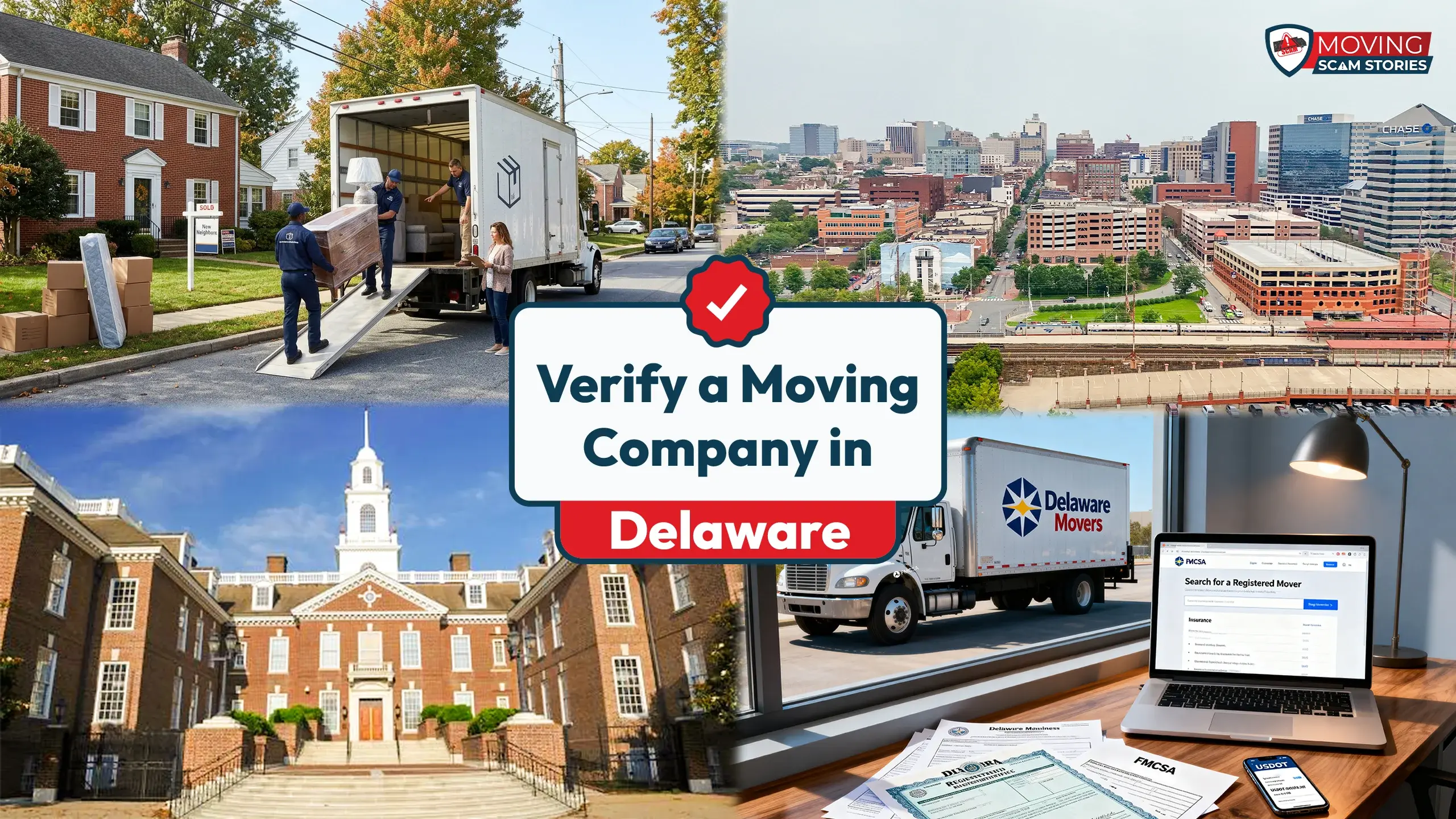
Use the FMCSA “Search for a Registered Mover tool. It allows you to review:
- Registration status (Active or Not Authorized)
- Business type (Carrier, Broker, or both)
- Complaint history
- Company contact details
USDOT Number Verification
Ask the mover for their USDOT number and verify it in:
- FMCSA mover search tool
- SAFER Company Snapshot system
What you want to see:
- Status listed as “Active or “Authorized for HHG (Household Goods)
- Matching company name, phone number, and address
Step 4: Confirm Legal Business Identity
This is where many moving scam stories begin. The company you speak with may not be the legal entity handling your move.
What to Do
- Ask for the exact legal business name that will appear on your contract.
- Compare it with Delaware business records.
- Match it with FMCSA records if interstate.
What to Watch For
- Different names on the estimate vs contract
- No clear legal entity listed
- Recently formed companies with no history
Step 5: Verify Physical Presence and Operations
Paperwork is not enough. You need to confirm the company actually exists in real life.
Look for:
- A real physical address (not just a PO box or virtual office)
- Branded trucks or equipment
- A working phone number with consistent responses
- Local presence that matches their claims
This is one of the simplest ways to identify legitimate movers in Delaware.
Step 6: Check Insurance and Liability Coverage
Insurance is one of the strongest indicators of professionalism and accountability.
What to Ask For
- Proof of liability insurance
- Proof of cargo insurance
- Insurance provider name and policy dates
Real Industry Benchmarks
- Federal minimum liability coverage: $750,000
- Many reputable movers carry $1,000,000 or more
- Cargo coverage often ranges from $5,000 to $50,000, depending on company size.
Always match this information with FMCSA records (for interstate moves). This is a key step to verify the mover's license credibility.
Step 7: Review Consumer Complaints and History
This step shows how the company behaves after getting your money.
Where to Check
- FMCSA National Consumer Complaint Database (NCCDB)
- Delaware Division of Consumer Protection complaint system
- Online review platforms (Google, Yelp, BBB)
FMCSA data shows thousands of complaints filed each year against movers, with common issues including price changes, delivery delays, and damaged goods.
If you see repeated complaints about the same issue, take it seriously.
Step 8: Verify Estimates and Documentation
Before agreeing to anything:
- Get a written estimate, not just a verbal quote
- Confirm all services are listed clearly (labor, distance, packing, stairs, etc.)
- Check that the company name matches all verified records
Federal rules require interstate movers to provide written estimates and a “Your Rights and Responsibilities When You Move document.
Step 9: Confirm Final Details Before Hiring
This is your final checkpoint before making a decision.
Ask direct questions:
- Who will actually handle the move?
- What is the exact timeline for pickup and delivery?
- How are damages or claims handled?
- What payment methods are accepted?
Carrier vs Broker Clarity
Ask clearly:
- Are you the carrier or a broker?
- If broker, which carrier will handle my move?
- Can I verify that carrier separately?
Consumer Rights When Hiring Movers in Delaware
Most people only think about their rights after something goes wrong. The smarter approach is to understand them before you sign anything.
Right to Hire Properly Registered and Insured Movers
In Delaware, movers must operate as legally registered businesses and, for interstate moves, must comply with federal regulations under the Federal Motor Carrier Safety Administration (FMCSA).
You have the right to:
- Work with properly registered and licensed movers in Delaware.
- Ask for proof of business registration and insurance.
- Request a USDOT number for interstate movers.
- Refuse service if the company cannot provide verifiable credentials.
Right to Written Estimates
You are entitled to a written estimate before your move begins.
For interstate moves, federal law requires movers to provide written estimates and disclosures under FMCSA rules.
For Delaware-based moves, you still have the right to:
- Request a detailed written estimate.
- See clearly listed charges such as labor, mileage, packing, stairs, fuel, or storage.
- Know whether the estimate is binding or non-binding.
FMCSA data shows that pricing disputes are among the top reasons for complaints, so this step directly helps you check moving company credentials.
Right to Clear Contracts and Documentation
Before moving day, you should receive proper documentation.
This may include:
- A bill of lading (required for interstate moves under federal law)
- Written terms and conditions
- Insurance coverage details
- Company contact information
You have the right to read and understand everything before signing. Never feel rushed into agreeing to unclear terms.
Right to Insurance and Liability Protection
You have the right to:
- Ask what type of valuation coverage is included
- Understand released value protection (typically $0.60 per pound per item under federal rules)
- Request written confirmation of coverage limits
This is a critical part of dealing with licensed moving companies in Delaware.
Right to Fair Pricing and No Surprise Charges
You have the right to:
- Transparent pricing
- Advance disclosure of additional fees
- An explanation before any extra charges are applied
Many moving scam stories involve sudden price increases on moving day. Knowing this right helps you avoid those situations.
Right to File a Complaint in Delaware
If something goes wrong, you have clear options to take action.
You can file complaints with:
- Delaware Division of Consumer Protection
- Delaware Department of Justice (Consumer Protection Unit)
- Federal Motor Carrier Safety Administration (for interstate moves)
For interstate issues, you can file through the National Consumer Complaint Database or call 1-888-DOT-SAFT (1-888-368-7238).
Right to Know Whether You Are Hiring a Carrier or a Broker
This is one of the most important rights you have.
You have the right to know:
- Whether the company is the actual carrier
- Or a broker arranging the move
If they are a broker, they must disclose the actual carrier. You should always check moving company credentials for that carrier separately.
Right to Refuse Service Before Loading
If something does not feel right, you can stop the process before your belongings are loaded.
You have the right to refuse service if:
- The company name does not match your paperwork
- Movers cannot show identification
- The contract changes unexpectedly
- The price increases without explanation
Right to Protect Yourself From Scams
You are not required to rush your decision.
You have the right to:
- Take your time before signing
- Verify all business and federal records
- Ask for proper documentation
- Compare multiple movers
- Walk away without pressure
Where to Report a Fraudulent Moving Company in Delaware
Even if you do everything right, problems can still happen. There are clear state and federal channels where you can report the issue and take action.
Delaware Division of Consumer Protection
If your move took place within Delaware, your first step should be the Delaware Division of Consumer Protection, which operates under the Delaware Department of Justice.
You should report here if the mover:
- Operated without proper moving company registration
- Misrepresented being among licensed moving companies in Delaware
- Charged unfair or unexpected fees
- Failed to deliver services as promised
- Engaged in deceptive or misleading practices
How to File a Complaint in Delaware
You can submit a complaint online or by contacting the Consumer Protection Unit directly.
Prepare the following details:
- Company name and contact information
- Written estimate or contract
- Payment receipts or transaction records
- Photos or documentation of damage or misconduct
- A clear timeline of events
Delaware Department of Justice (Consumer Protection Unit)
For serious cases involving fraud, scams, or deceptive practices, you should also report directly to the Delaware Department of Justice.
They handle cases involving:
- False advertising about licensing or insurance
- Deposit fraud or financial misconduct
- Contract deception
- Fake claims of being legitimate movers in Delaware
- Patterns that match known moving scam activity
This office acts as the primary authority protecting consumers from fraudulent business behavior in Delaware.
If you want to help others avoid similar situations, you can also submit your scam story.
Better Business Bureau (BBB) and Public Complaint Platforms
While not a government agency, the Better Business Bureau collects and publishes complaint histories.
You can report if:
- The company has unresolved customer complaints
- There is a pattern of poor service or unethical behavior
- You want to warn other consumers publicly
Federal Reporting Options
If your move crossed state lines, federal authorities must be involved. Interstate movers fall under the Federal Motor Carrier Safety Administration.
You should report to federal agencies if:
- Your move was interstate
- The company used a fake or inactive USDOT number
- Your belongings were held for extra payment
- The mover violated federal rules
- You encountered false claims during attempts to verify a moving company in USA standards
Federal Complaint Channels
1. Federal Motor Carrier Safety Administration (FMCSA)
The FMCSA operates the National Consumer Complaint Database (NCCDB), which is the main federal system for moving complaints.
You can file online or call: 1-888-DOT-SAFT (1-888-368-7238)
Provide details such as:
- USDOT number (if available)
- Company name and address
- Contract and estimate documents
- A clear description of the issue
2. Federal Trade Commission (FTC)
The FTC handles broader fraud and deceptive business practices across the United States.
You should report here if:
- The company used misleading advertising
- There were false claims about licensing or services
- The situation involves a larger scam pattern